COMMUNITY DEBATE · JUNE 2026
Cellar it or open it:
when to pour your best bottle?
By Martín Iglesias · June 23, 2026 · 10 min read
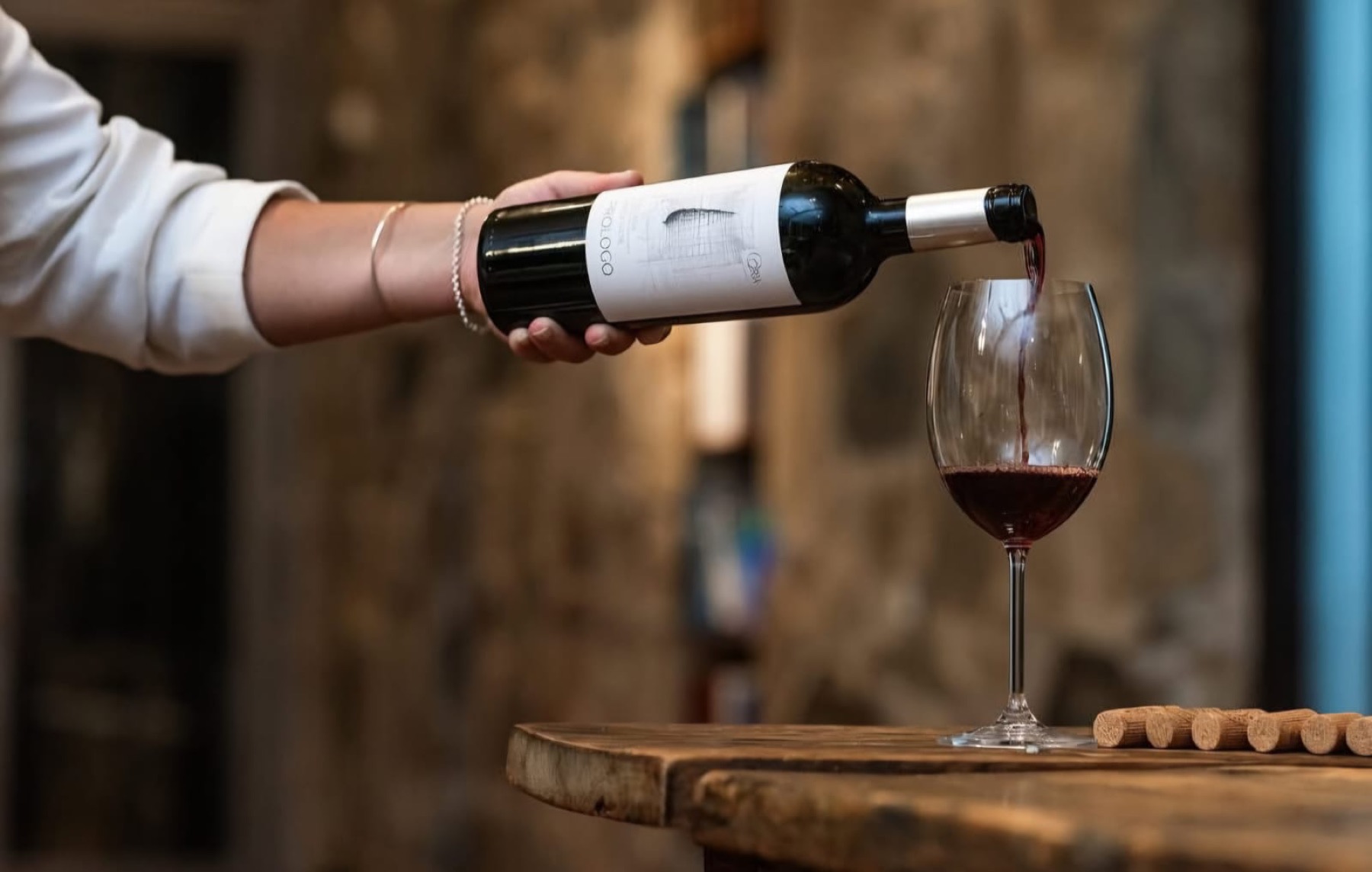
We all have that bottle. The one waiting for "the moment". The uncomfortable question is whether that moment will ever truly arrive — or whether we're letting it slip away, glass after glass, year after year.
Let me confess something: for years I was, without a doubt, on Team Cellar. I had bottles I guarded like relics. I'd look at them, rearrange them, quietly calculate which birthday, which anniversary, which perfect dinner I'd open them for. And when that day came, I almost always found an excuse to wait a little longer. "Not yet. This one deserves something bigger."
In time I came to understand that phrase —"not yet"— was a beautiful trap. And I understood it, in good part, while talking with Roberto Cipresso in the vaults of the monastery. But we'll get to that conversation in a moment. Let's start at the beginning, because this is one of the oldest —and loveliest— debates in wine culture, and almost certainly you, too, fall on one side of the divide.
Two ways of loving wine
There's a scene that repeats itself in any home where wine is loved. Someone opens the cupboard, looks at the bottle they've been saving, weighs it for a few seconds… and puts it back. They keep it for an occasion worthy of it. And so that bottle becomes a permanent promise that never quite comes to pass.
For Team Cellar, a great bottle is time in liquid form: to open it too soon is to interrupt something that is still growing. There's a real pleasure in the waiting, in knowing it's there, in the fantasy of the perfect night. To cellar a wine is, deep down, an act of faith in the future: the conviction that better days are coming, days worthy of the best we have.
For Team Open, wine was made to be drunk, not admired. You don't wait for the occasion: you create it. They know by heart the flip side of saving —the bottle held so long it slipped past its prime, the dreamed-of dinner that never got organised— and they prefer the ordinary Tuesday that, thanks to a good bottle, stops being ordinary. To open a wine is also an act of faith, but in the present: the certainty that this moment, with these people, is already reason enough.
What's interesting is that almost no one is one hundred percent on a single team. We're contradictory: we cellar some and open others, and we spend our lives negotiating with ourselves over which bottle deserves which fate. In that intimate negotiation, much of our relationship with pleasure, with time, and with the very idea of "deserving" is at play.
The conversation that changed my mind
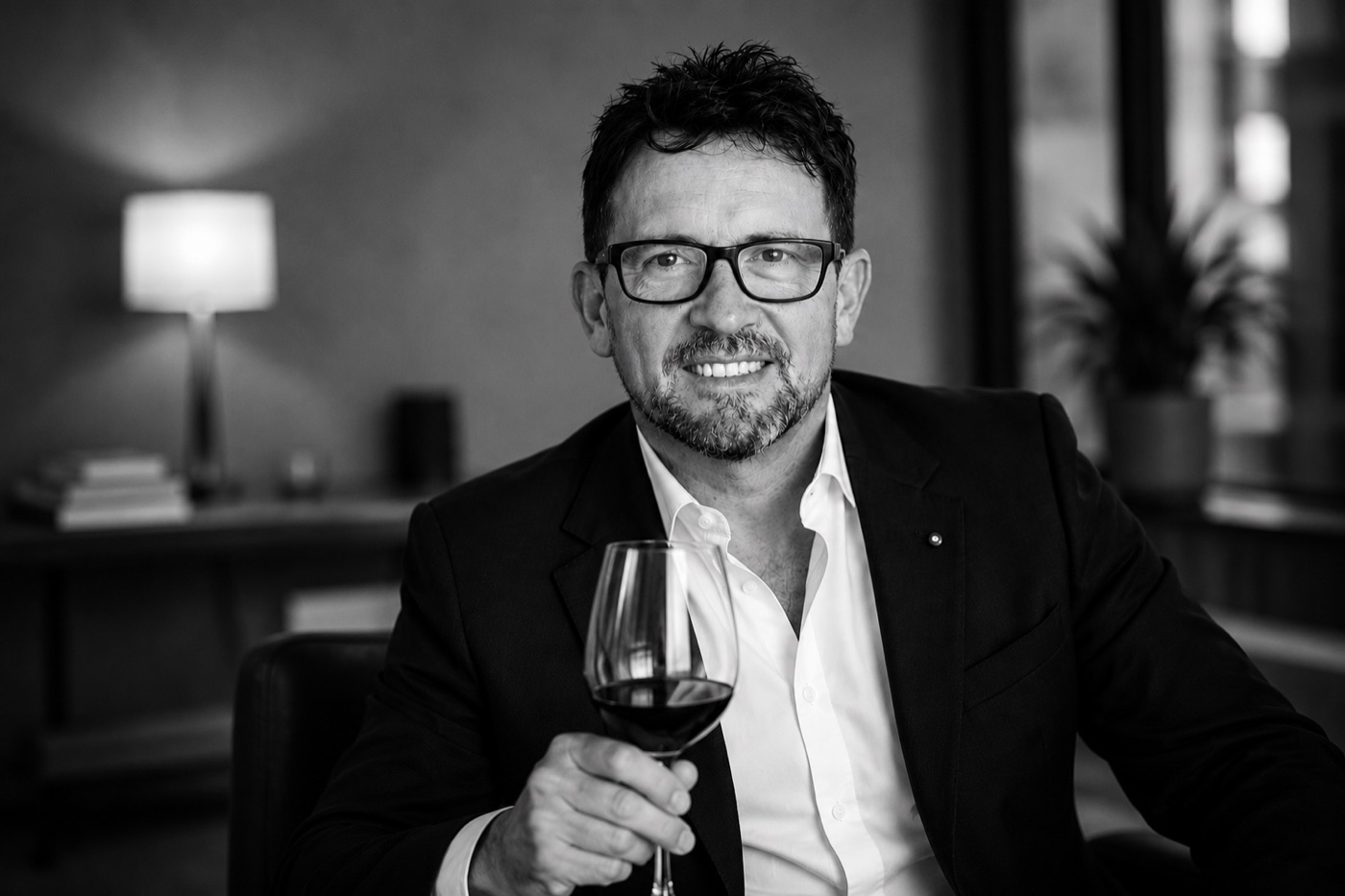
One afternoon, walking down to the monastery's barricaia with Roberto, I asked him the question anyone would ask a winemaker: "How long will this wine last?". I was expecting a number. He gave me a lesson.
Roberto explained that the question was wrong. That a wine doesn't "last" the way one endures a burden, but rather lives: it changes, matures, finds its best version and, at some point, begins to take its leave. And that the winemaker's job is not to make a wine that lasts a long time, but a wine that is alive for a long time. The difference, he told me, is everything.
It was in that conversation —and in several others afterwards, almost always with a glass between us— that he told me something I hadn't had on my radar: the silent role of potassium in a wine's longevity. For me, until that day, potassium was a matter of bananas and high-school biology classes. Roberto made me see that it's one of the hidden protagonists behind why a bottle withstands the passing years. And to understand it, you first have to talk about Sangiovese.
What Sangiovese has to say
The Sangiovese of Val d'Orcia is one of the few wines that truly gain with the years. Not all of them do: the vast majority of the world's wines are made to be enjoyed young, within the first two or three years. But there's a minority —the great cellaring reds— that turn time to their advantage. And the great Sangiovese of Val d'Orcia is one of them.
Why? For three reasons that come together. First, the genetics: over the decades, Roberto selected more than a hundred Sangiovese biotypes from the territory itself, choosing those with the best structure and cellaring potential. Second, the galestro, that fragmented schist soil that gives the wine a lively acidity and a mineral backbone that holds the structure together over time. And third, the climate: at around 300 metres above sea level, the cool nights of Val d'Orcia preserve the grape's natural acidity, and acidity is one of wine's great preservatives.
With those three pillars, a great Sangiovese can live and improve for two or three decades. Its tannins, fine but abundant, gradually polish themselves; its aromas pass from fresh cherry to something deeper —damp earth, dried flowers, leather, that mineral floor of the galestro. It's a wine that rewards patience.
But here's the trap that Team Cellar would rather not hear: cellaring is not the same as forgetting. A wine stored any old way —standing up, in the heat, in the light— or for too long, doesn't age: it goes out. Patience has an end, and recognising it is part of the craft of drinking well. As Roberto told me on one of those afternoons:
"A wine kept for an occasion that never comes is not patience: it's fear. The best moment to open a great Sangiovese is when the table deserves it — and almost always, the table already deserves it." — Roberto Cipresso
Prólogo: a wine built to last
If there is a wine made for Team Cellar, it's Oria's Prólogo. And the reason lies in how Roberto makes it.
Cipresso developed a technique he calls dissociation winemaking (vinificazione per dissociazione). Instead of extracting everything together and all at once —which is what yields powerful but also harsh wines— Roberto separates and modulates the extraction: he seeks out the finest elements from the skin, layer by layer, to keep more aromas, more nuances of flavour and more texture, leaving the hardness behind. The result is a wine that is more complex, more elegant and, above all, more alive.
This is where potassium enters. Roberto explained it to me like this, in one of those conversations: potassium is the most abundant mineral in the grape, and it lives mostly in the skin. When you extract with more care —when you go looking for the good in the skin instead of squeezing it out by force— you also take with it more potassium. It isn't a goal in itself: it's a beautiful consequence of doing things well. And, as he told me, it's one of the factors that helps the wine withstand time in the bottle.
When I got home I looked into it on my own, because I was curious to understand the mechanism. And what I found is more subtle —and lovelier— than a simple "more potassium, more durability".
Potassium doesn't act alone: it bonds with tartaric acid, the noblest and most stable acid in wine, the one that holds on when others degrade. Together they form potassium bitartrate, and that pairing works as a buffer system (what chemistry calls a buffer): it gives the wine the ability to cushion the shifts in its own chemistry over the years. A wine that is well balanced on that axis ages calmly and holds its structure, instead of falling apart all at once.
There's a detail that fascinated me. With the years, part of that bitartrate crystallises inside the bottle or on the cork: these are the famous "wine diamonds". Many people get alarmed when they see them and believe the wine is faulty. It's exactly the opposite. In the trade they're read as a good sign: the trace of a wine made with naturalness, not cosmetically "polished" to look tidy on the shelf, and with a vocation for cellaring. If you ever find those little crystals in a bottle of Prólogo, smile: it's the wine telling you it's been alive all this time.
Now, let's be honest, because Roberto is the first to be: potassium is no magic wand. In excess it can raise the wine's pH and, paradoxically, make it more fragile. That's why the real art is not "adding more potassium", but balance: that neither potassium nor acidity rule alone. That balance —decided in the vineyard and in the cellar, not in a formula— is what turns time into an ally instead of a threat. And it's precisely what separates a cellaring wine from an ordinary one.
When the wine is yours, the question changes
For the Oria community there's a twist that changes everything. Your wine is not just any bottle bought off a shelf: it's born from your own land, from your harvest, and it carries your name. That adds a layer of meaning no purchased wine can have.
Because when the wine is yours, cellaring it or opening it stops being a question of pleasure and becomes a question of memory. Do you cellar it to mark a family date —a wedding, a birth, a toast you want to be able to repeat twenty years from now? Or do you open it every harvest, with the community, to celebrate that the cycle has come full circle once more?
I know members who set aside a case of their first vintage for the day their child turns eighteen. And I know others who open a bottle whenever they can, convinced that the best toast is the one that actually happens. Both stances strike me as beautiful, and both are, deep down, the same thing: your own wine is not only for drinking. It's for marking time. Each person decides which moments deserve to be put in a bottle.
So, cellar it or open it?
After all those conversations with Roberto, my answer changed. Today I'm neither on Team Cellar nor on Team Open: I'm on the team of intention. Cellaring is fine if you cellar for something concrete and care for the bottle as you should. Opening is fine if you do it to share and to be present. The only thing that's not fine is the limbo: letting time decide for you until one day you open the dreamed-of bottle and discover you waited too long.
A great wine —like a good Sangiovese, like Prólogo— is built to keep you company over a long stretch of the road. It has the genetics, the soil, the climate and, yes, just the right potassium to endure. But that time the wine gives you is not for postponing life: it's for having the freedom to choose the moment, without rush and without fear. The wine has already done its part. The occasion is up to you.
Which team are you on?
There's no right answer. But we want to know yours.
The best wine is the one you know how to wait for. The perfect occasion exists.
The best wine is the one you share today. The occasion is created.
Tell us your story
Are you a cellarer or an opener? What's the bottle you're waiting to open, or the uncorking you'll never forget? Write to us: the best stories we share with the community.
Join the debate on WhatsAppReferences
- Zoecklein, B. & Fugelsang, K. — Potassium Bitartrate Stabilization of Wines. Virginia Tech, Enology. enology.fst.vt.edu
- The Power of Potassium — Imbibe Solutions. imbibe-solutions.com
- Tartrate crystals in wine — ask Decanter. Decanter. decanter.com
- What's the Gunk in My Wine? — Wine Enthusiast. wineenthusiast.com
- Research progress of tartaric acid stabilization on wine characteristics. NIH / PMC. ncbi.nlm.nih.gov