Roberto Cipresso
Italy's best winemaker. 133 Sangiovese clones. Thirty years redefining what a Tuscan wine can be.
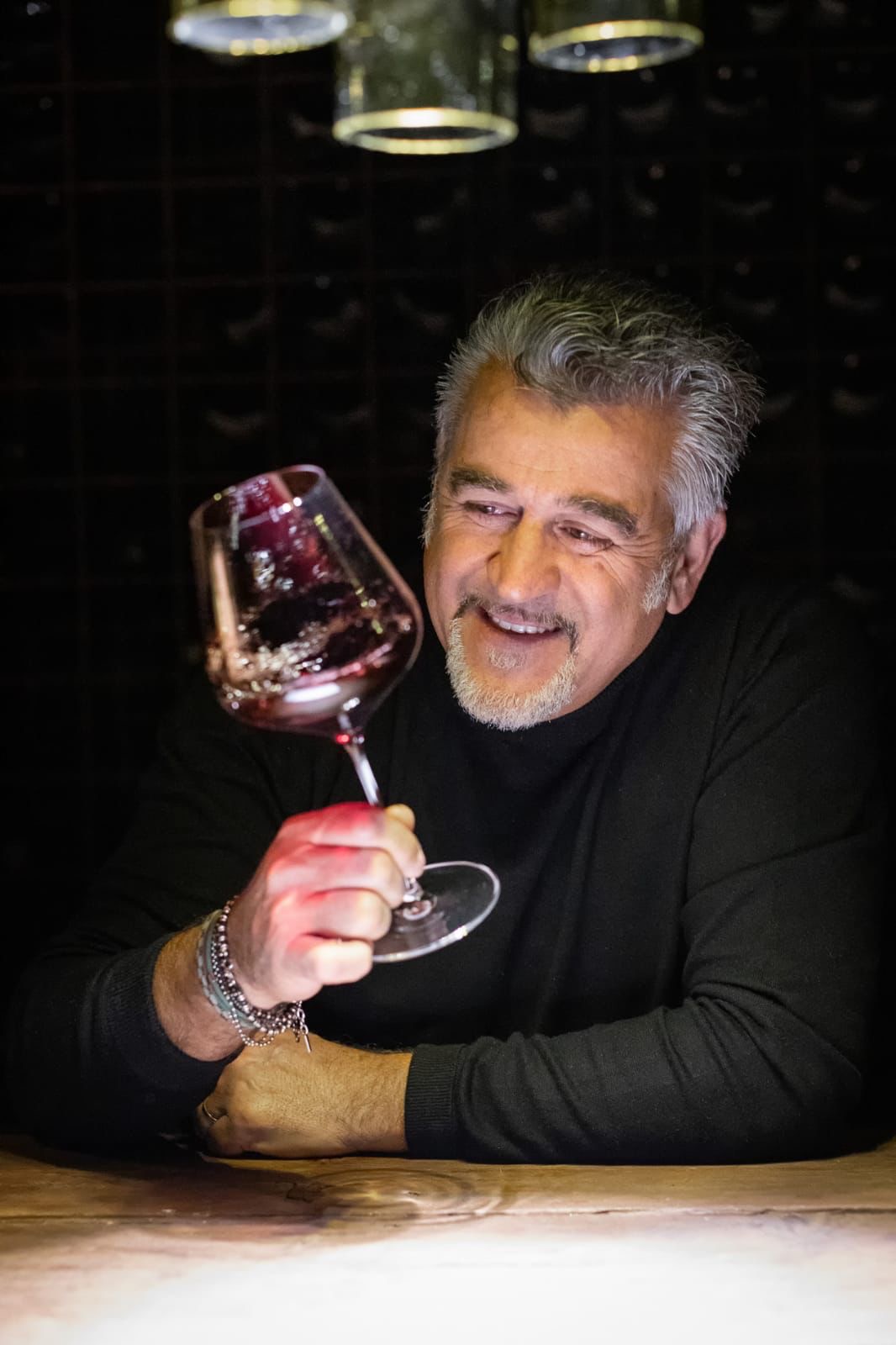
"Wine is not made.
It is understood."
Roberto Cipresso was born in the Veneto and trained as a winemaker in an Italy that was beginning to discover that its ancient vineyards held something the world had not yet fully understood. He went to Val d'Orcia when few knew of it, and spent decades learning its soil clone by clone, harvest by harvest.
In 2006, critic Luca Maroni named him Italy's best winemaker. By then Cipresso had already worked in 25 countries —from Patagonia to South Africa, from California to the depths of Tuscany— always in search of the same thing: to understand how soil, climate and time speak through the grape.
When Martín Iglesias called on him to co-found Oria, Cipresso brought with him something unrepeatable: 133 Sangiovese clones selected one by one over decades, and a technique of his own — dissociation vinification— that preserves the complexity of the wine and gives it an ageing potential of 30 to 40 years.
Join Cipresso's project"When I first arrived in Val d'Orcia I understood that it was not I who would make the wine. It was the place that had already decided everything. My job was not to interfere."
133 Sangiovese clones
For three decades, Roberto Cipresso walked the vineyards of Val d'Orcia identifying variations in the behaviour of Sangiovese —his signature variety— according to the micro-soil, the sun exposure and the altitude of each parcel.
The result is a massal selection of 133 clones of his own: not commercial clones, but unique genetic lines that exist only in the vineyards of Oria. When you drink a Sangiovese from Oria, you are drinking something that cannot be found anywhere else in the world.
This clonal biodiversity —combined with the galestro and alberese soils characteristic of Val d'Orcia— is the foundation of the unmistakable aromatic profile of Oria Prólogo.
Dissociation vinification
A method developed by Cipresso that changes what is possible in a Tuscan wine.
Phase separation
Fermentation is divided into dissociated phases: the glycolytic part (sugars) and the aromatic part are handled independently. This makes it possible to preserve the volatile compounds that, in traditional vinification, are lost to the heat.
Surgical temperature control
Each phase operates at a differential temperature with deviations of tenths of a degree. The result is a wine that retains the aromatic freshness of the fruit without losing the tannic structure needed for prolonged ageing.
Extended tannin maturity
Dissociation allows a more selective extraction of tannins, choosing only those that can polymerise over the long term. This builds the structure that gives Oria Prólogo its capacity to evolve over 30 to 40 years.
An unrepeatable identity
Combined with the 133 clones and the galestro-alberese soil of Val d'Orcia, the dissociation method produces a wine that cannot be replicated outside these exact coordinates. The terroir as the only possible ingredient.
Thirty years of pursuit
Oenology studies in Italy. First work in wineries of northern Italy. An early fascination with Sangiovese.
He settles in Val d'Orcia. He begins the clone-by-clone selection of Sangiovese. He works in international consultancy across South America, Africa and Australia.
2006: Luca Maroni names him Italy's best winemaker. He develops the dissociation vinification technique. He brings 133 clones into stable production.
Consultancy in 25 countries. Projects in Mendoza, Uruguay, California, South Africa. Each project deepens his understanding of Sangiovese as a global variety.
Together with Martín Iglesias, he co-founds ORIA 1.618 SAS. He applies three decades of clonal selection and his own technique to the most ambitious fractional ownership project in Val d'Orcia.
Roberto Cipresso tends your vineyard
Every fraction of land at Oria is cultivated with the same care Cipresso applies to his most exclusive projects. Your Sangiovese is born of 30 years of unrepeatable knowledge.